TYPE TU Delft, Graduation project
TIMELINE Nov '23 - Aug '24
ASSIGNMENT Design and conduct an independent research
TOOLS & METHODS Mixed methods research, Interviewing, Observations, More-than-human design, Insight cards, installation design, Notion, Miro, InDesign
A more-than-human design approach towards biodiverse neighbourhoods in Rotterdam
This research aimed to explore the expansion of a human-centered design approach toward a more-than-human perspective to enhance biodiversity in the shared garden of the Midscheeps, Rotterdam. This neighborhood is highly paved, and biodiversity is decreasing. Climate change is challenging the city, and new collaborations with nature should be sought to address this issue. Through observations, interviews, and interactive walks, this research explored symbiotic relationships to identify ways in which nature and human residents can contribute to the living environment.
The Neighborhood as an interconnected Systems
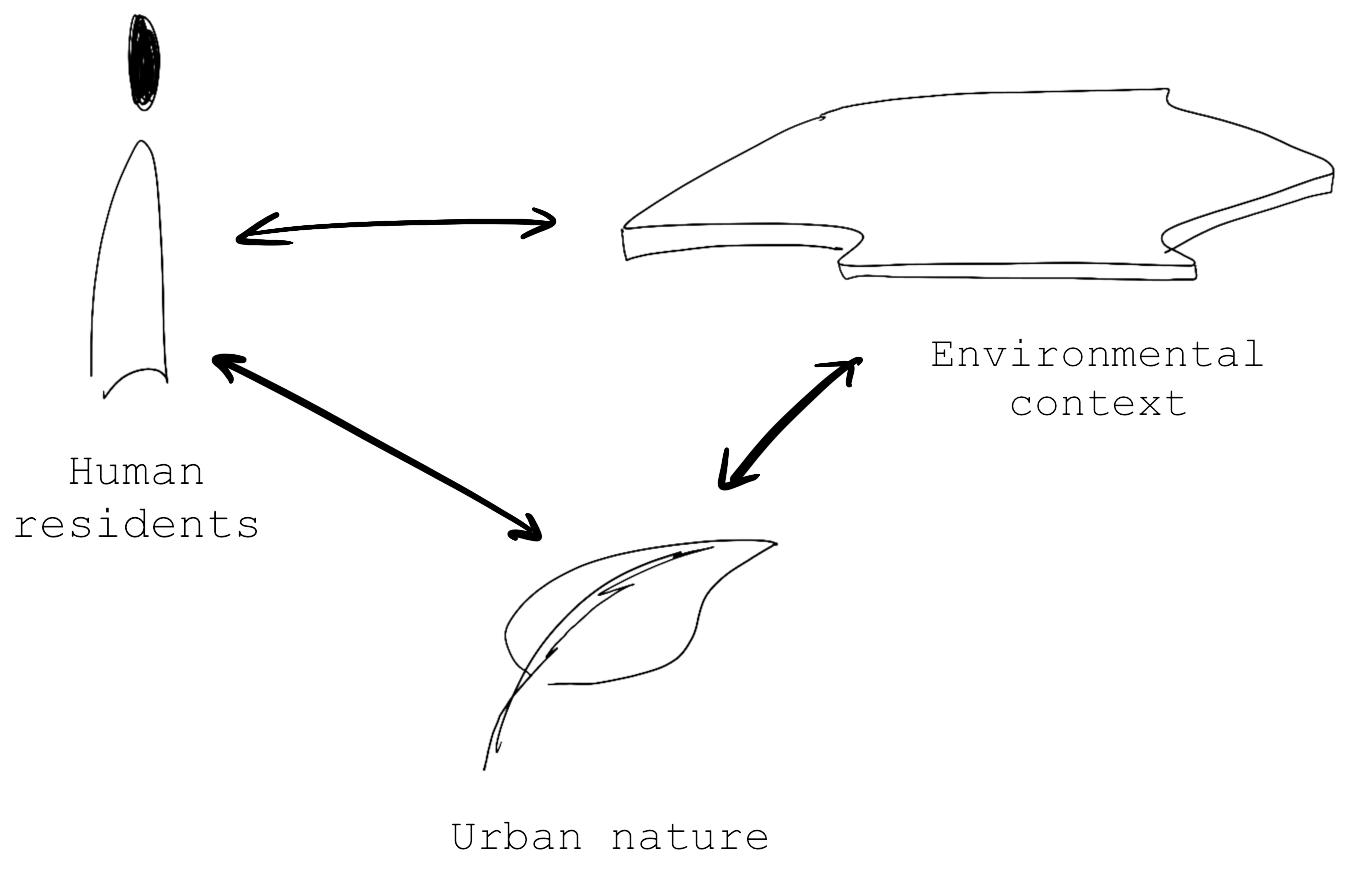
Design for Relations: Human-Nature-Environment Interactions
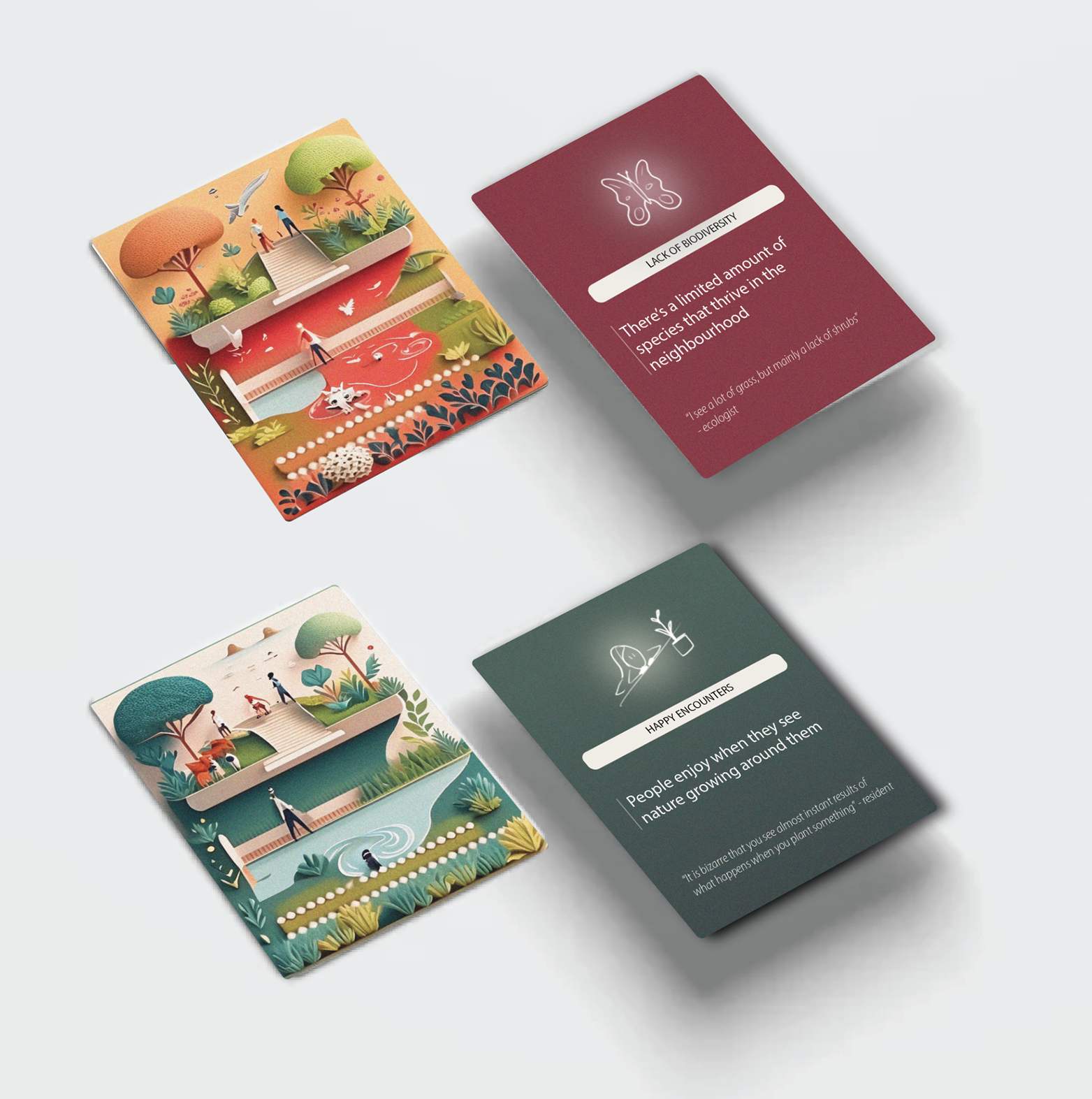
The insight cards were created to communicate key research findings. They aim to inform the design of relational tensions and opportunities between humans, nature, and the environment that could benefit from symbiotic relationships. The insight cards can be used as part of the overarching research project led by Hogeschool Rotterdam into this neighbourhood.
From over 120 valuable insights gathered in the neighborhood, 20 key opportunities and tensions were identified. Since plants do not communicate in human language, alternative research methods were required to explore perspectives from more-than-human species. To achieve this, I conducted interactive walks with a biologist through the neighborhood, engaged in conversations with residents, observed both nature and human activities, and visited the Museum of Natural History, complementing these methods with literature research. A city can be seen through many different lenses.
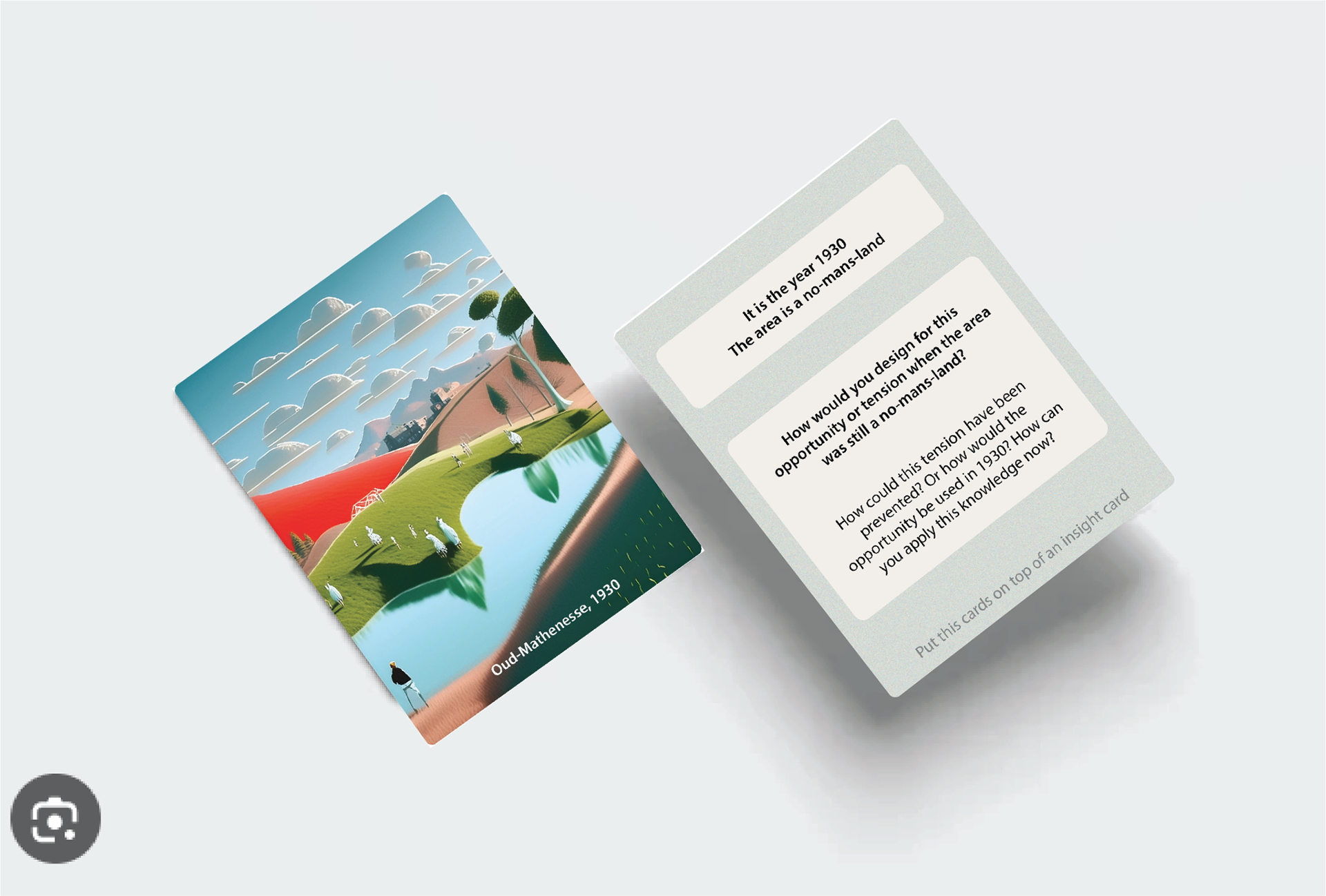
For example, the relations between human-nature-environment are constantly changing. An analysis of the neighbourhood in the past, present and future showed how different human views affected these relations. This was presented on extra insight cards and help the designer think about a situation or problem in a neighbourhood during a different time. How would they solve a problem in 1930 where the environment was yet a no-mans-land or in 2030 when we could see nature as a collaborator? And how can we apply these lessons to today's challenges?
Giving (more-than-human) Locals a Voice: An Interactive Installation
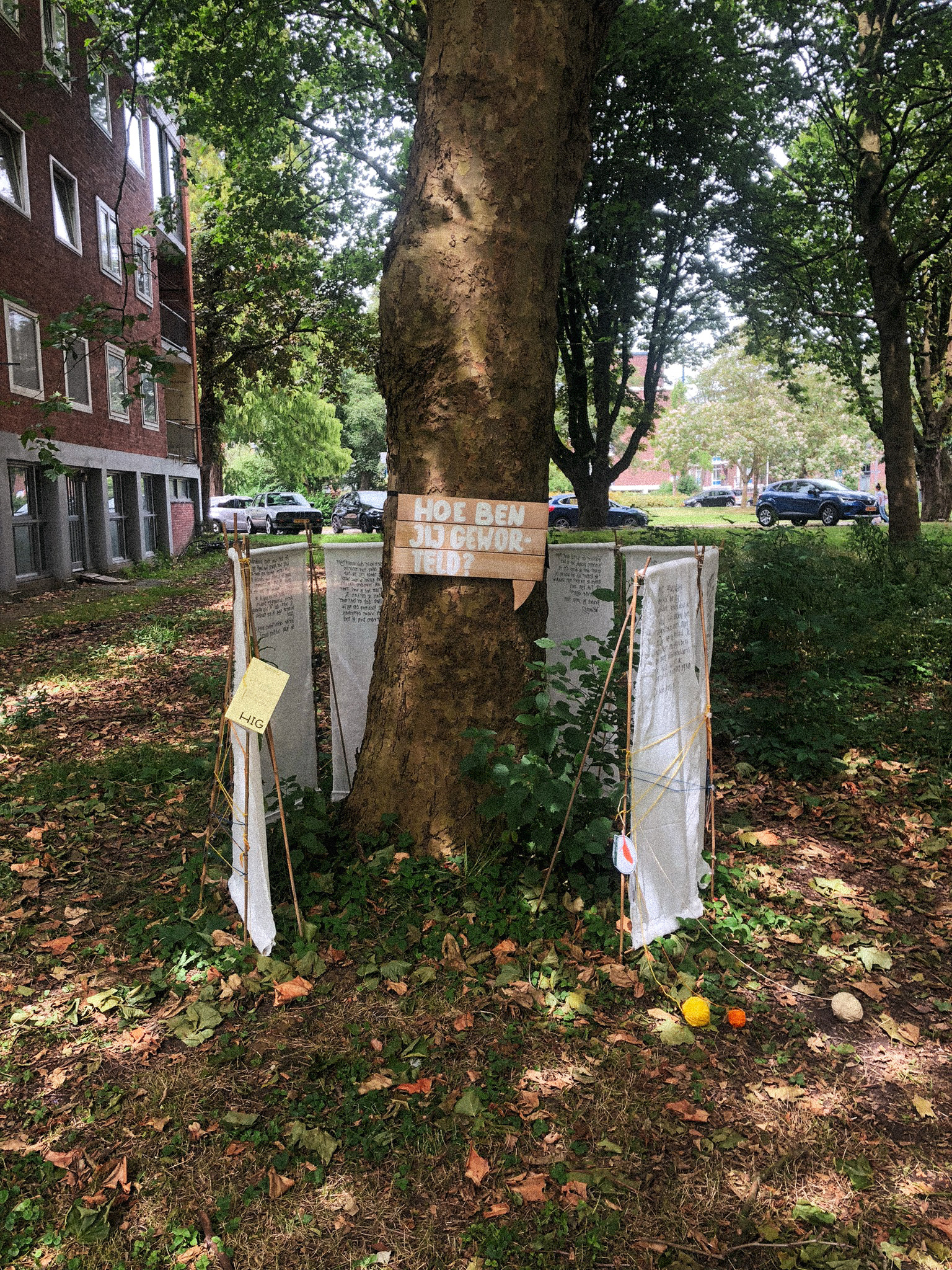
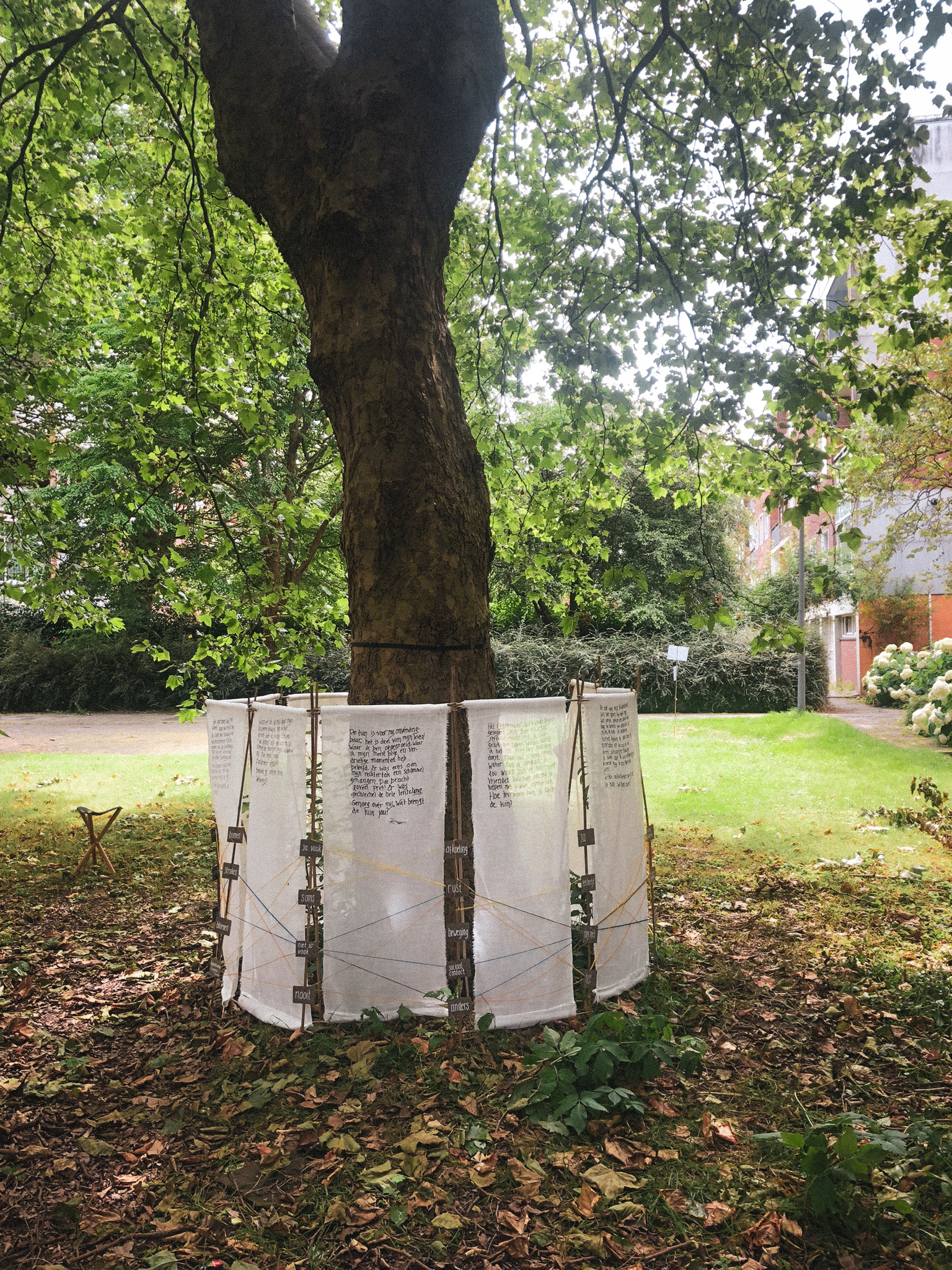
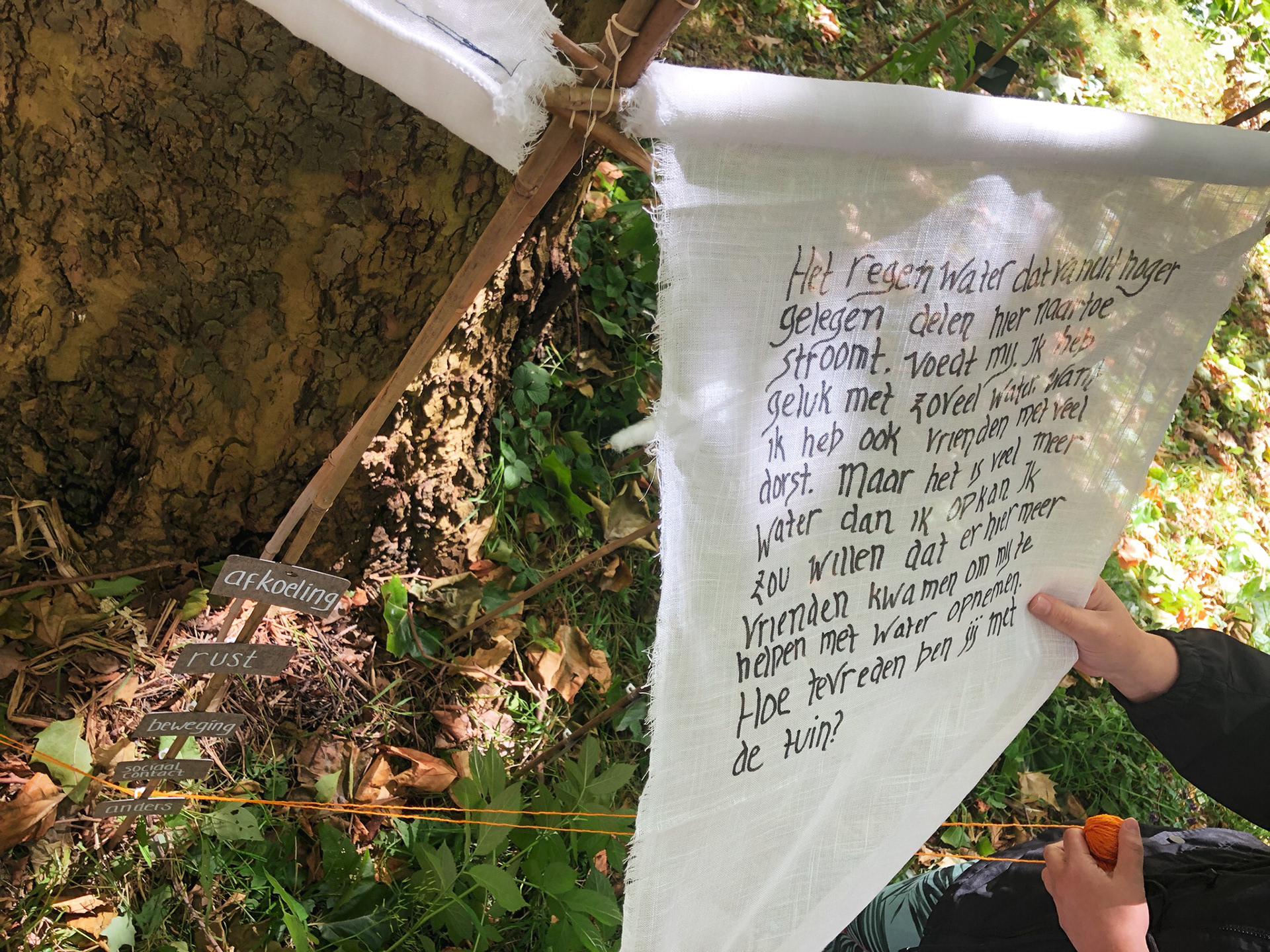
An old tree, who is rooted with a past and a future and is connected underground, was used as the center of the installation. Metaphorically, this bridged the human and natural worlds by highlighting similarities that enable us to connect with nature. The tree, located in the garden,
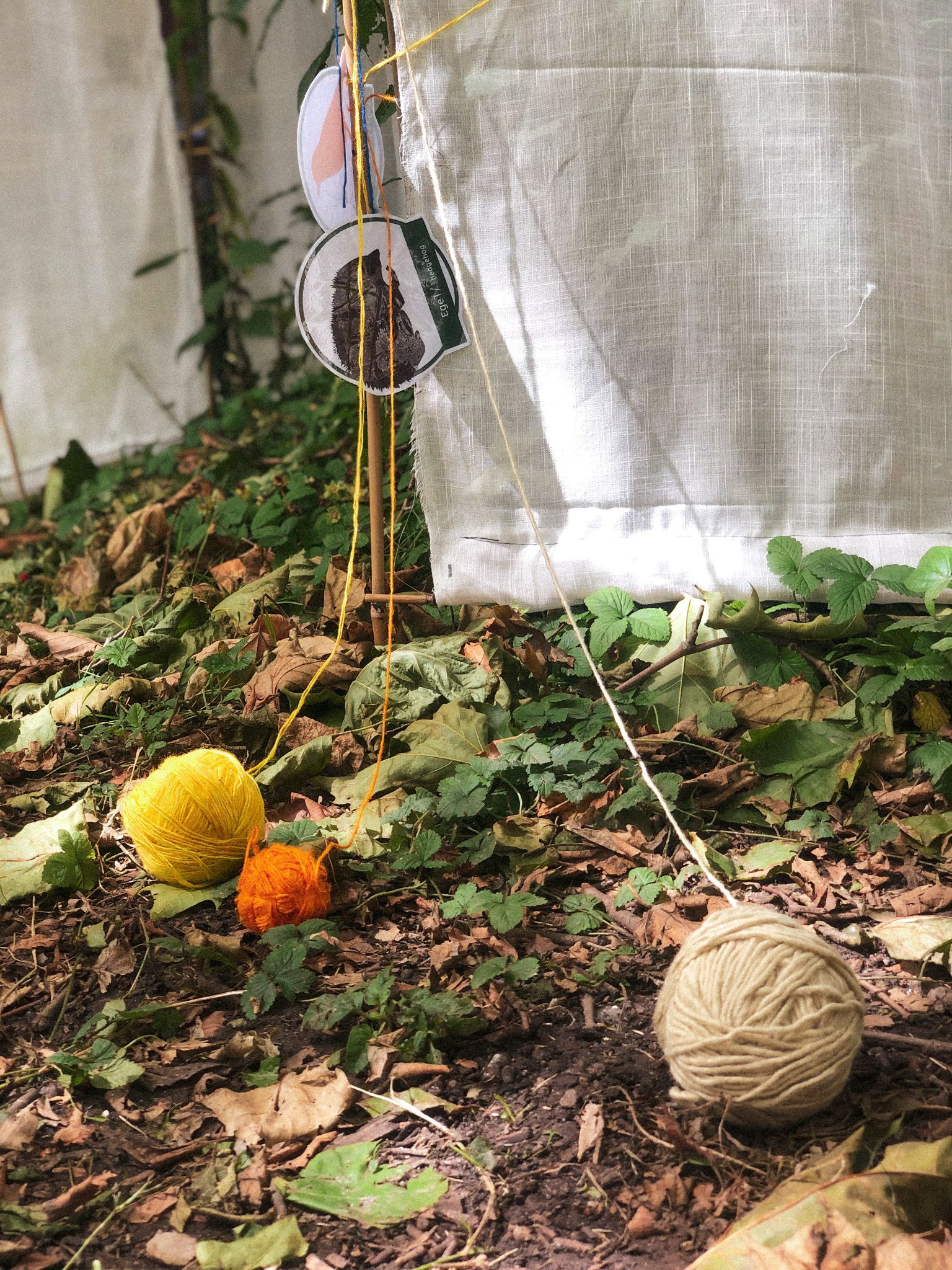
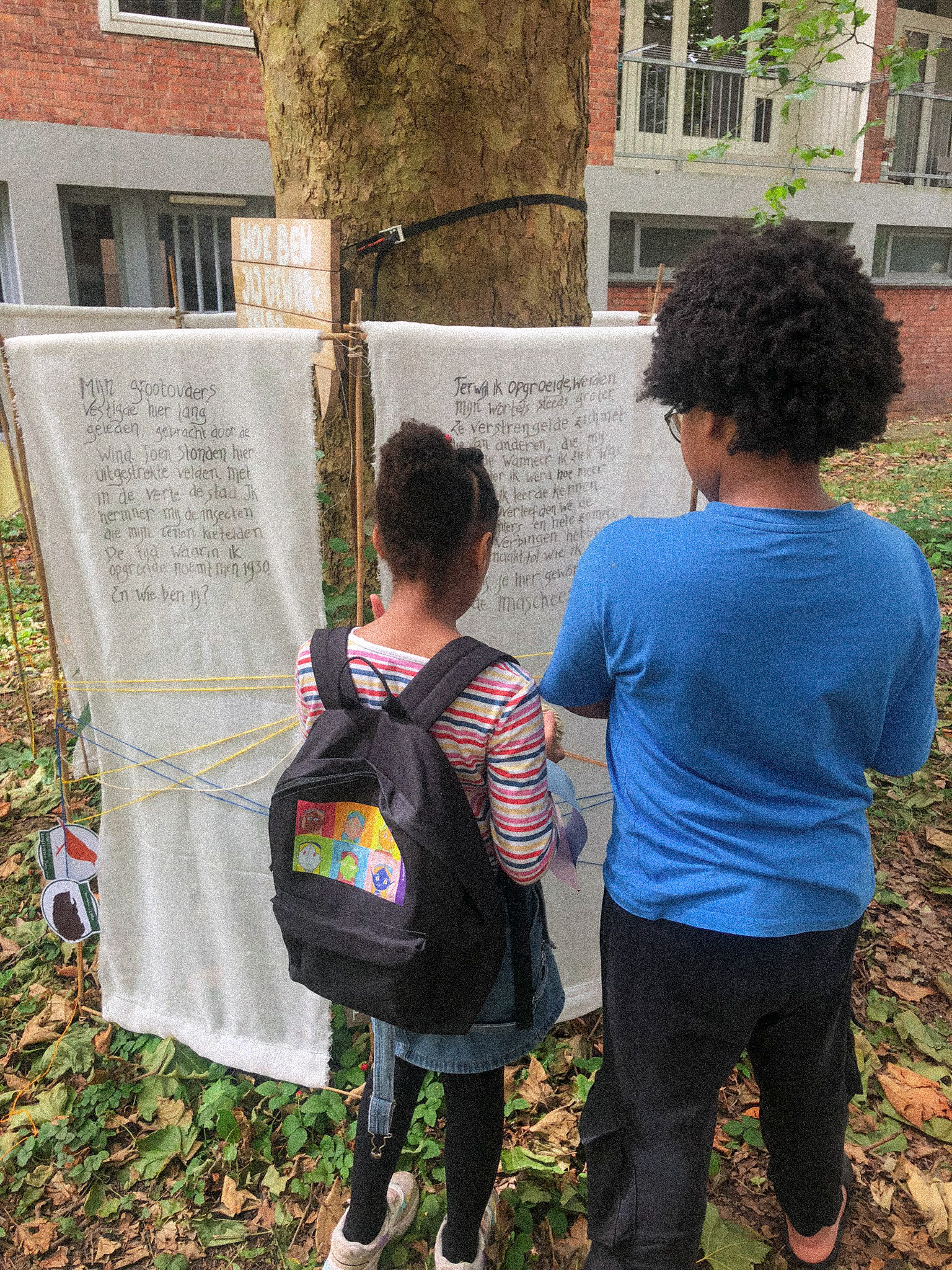
invites residents to engage with her narrative; about her history, her experiences and wishes for the future of the shared garden. Residents were encouraged to share their own narratives and reflect on the perspectives of others. By weaving a thread through multiple-choice questions such as; 'what would you like to do in these gardens?'. These interactions were captured and could be shared to elicit the unheard voices.
By facilitating a dialogue where the tree spoke and invited residents to reflect on their shared environment, the installation aimed to enhance awareness of the interconnections between humans and urban nature.
invites residents to engage with her narrative; about her history, her experiences and wishes for the future of the shared garden. Residents were encouraged to share their own narratives and reflect on the perspectives of others. By weaving a thread through multiple-choice questions such as; 'what would you like to do in these gardens?'. These interactions were captured and could be shared to elicit the unheard voices.
By facilitating a dialogue where the tree spoke and invited residents to reflect on their shared environment, the installation aimed to enhance awareness of the interconnections between humans and urban nature.
Reflection
Working in the emerging field of more-than-human design felt like a pioneering journey. This project challenged me to reimagine traditional research methods, finding innovative ways to translate more-than-human philosophies into practical design solutions. Embracing these perspectives pushed me to focus on interdependence over dependency, encouraging a broader view that considers the interconnected influences of humans and non-humans in the past, present, and future.
For the dependency on my supervisors Bregje van Eekelen and Virginia Tassinari, I should thank them for their guidance and insightful support. This project would not have been the same without the 'Neighbourhood as a Biotope' team from Hogeschool Rotterdam and Bioto, with whom I collaborated throughout the project.
For the dependency on my supervisors Bregje van Eekelen and Virginia Tassinari, I should thank them for their guidance and insightful support. This project would not have been the same without the 'Neighbourhood as a Biotope' team from Hogeschool Rotterdam and Bioto, with whom I collaborated throughout the project.